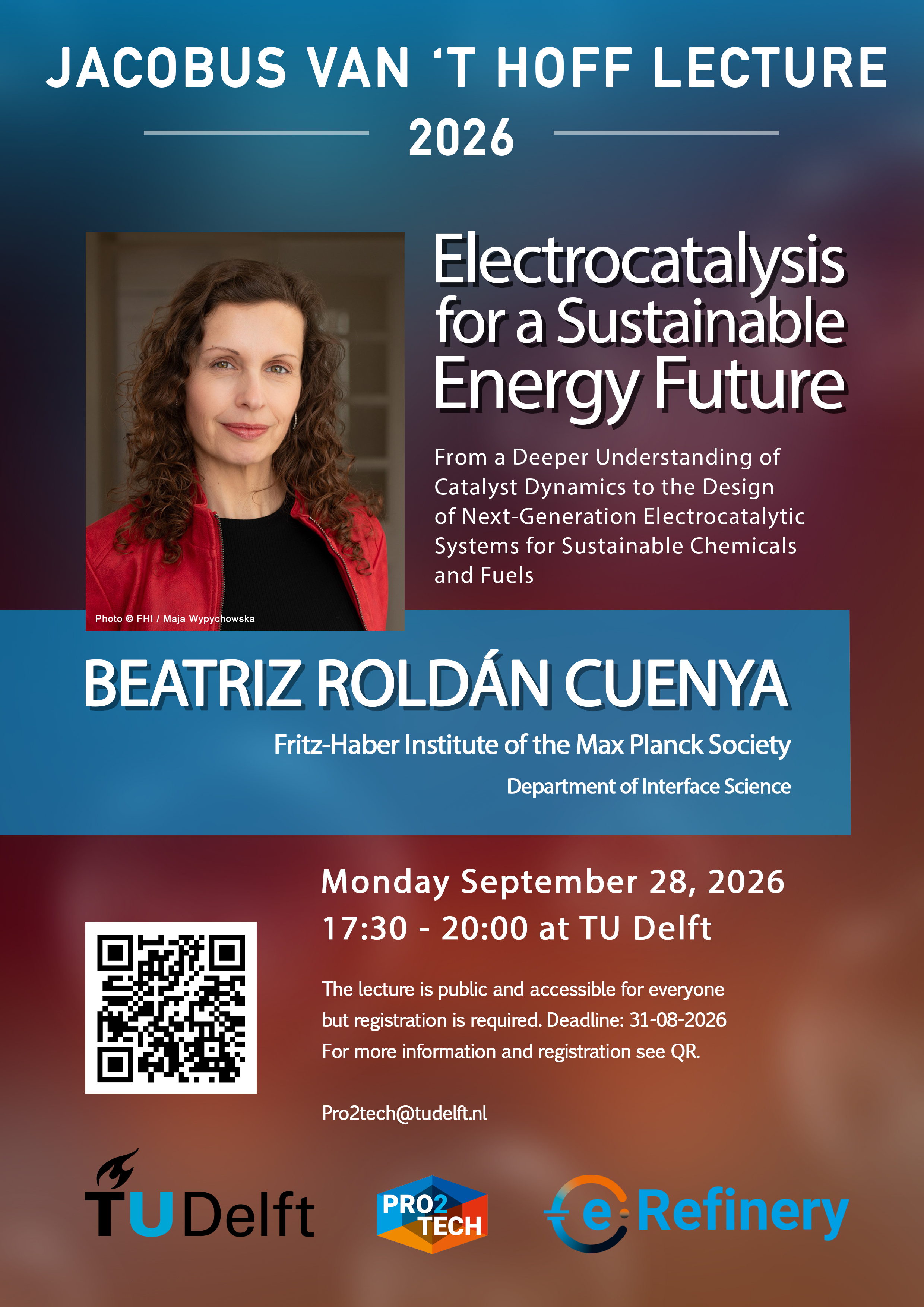
Speaker: Beatriz Roldán Cuenya, Department of Interface Science, Fritz-Haber Institute of the Max Planck Society
Electrocatalysis for a Sustainable Energy Future
The electrochemical conversion of abundant molecules into valuable chemicals and fuels using renewable electricity is central to the development of sustainable energy and production technologies. Achieving efficient, selective, and scalable processes requires advanced catalysts and a deeper understanding of how they operate under realistic working conditions. In particular, catalyst structures are often highly dynamic during operation, and these transformations can strongly influence catalytic performance.
This talk will highlight how catalytic materials undergo significant structural and chemical changes under reaction conditions, and how these evolving states govern reaction activity, selectivity, and stability. Examples from several important reactions, including the electrocatalytic reduction of CO2 (CO2RR), nitrate reduction to ammonia, and the oxygen evolution reaction (OER) will illustrate the relationship between the catalyst dynamics and functionality across a range of material systems comprising thin films, nanoparticles and single-atom catalysts.
Emphasis will be placed on the importance of operando and in situ characterization combining microscopy, spectroscopy, and diffraction techniques to monitor the transformations of the catalysts. This approach will provide key insight into catalyst activation, deactivation, and regeneration processes, as well as into the influence of the reaction environment, including electrolyte composition and impurities.
The lecture is public and accessible for everyone.
Registration is required, deadline: 31-08-2026 (extended tot 21-09-2026)
Location
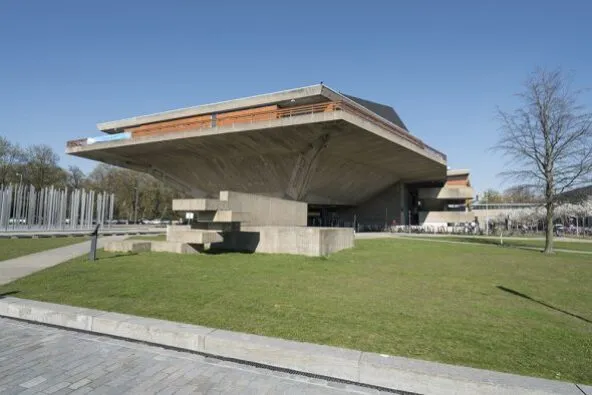
TU Aula Conference Centre Delft
Mekelweg 5
2628 CC Delft
Contact us
Jacobus Van 't Hoff Lecture 2026
 Registration website for Jacobus Van 't Hoff Lecture 2026
Jacobus Van 't Hoff Lecture 2026pro2tech@tudelft.nl
Jacobus Van 't Hoff Lecture 2026pro2tech@tudelft.nlhttps://www.aanmelder.nl/hoff2026
2026-09-28
2026-09-28
OfflineEventAttendanceMode
EventScheduled
Jacobus Van 't Hoff Lecture 2026Jacobus Van 't Hoff Lecture 20260.00EUROnlineOnly2019-01-01T00:00:00Z
To be announcedTo be announced