Showcases
The beating heart of the festival is a richly diverse market brimming with compelling examples, thought-provoking dialogue, relevant themes and refreshing perspectives. As a visitor, immerse yourself in a series of roughly four thought-provoking presentations and decide in advance which topics you don’t want to miss!

Reforming together? Recognition & Rewards, CoARA and the international call for change
During this showcase we'll be thinking about the ways in which Recognition & Rewards can connect with current international developments. What are some of the international concerns around the Recognition & Rewards programme? What would help in meeting these concerns head-on? And how can CoARA and The Netherlands National Chapter strengthen our efforts within the programme? Together, we will discuss practical ideas to further expand academic awareness of international developments in research assessment.
Stefan Penders - NWO

Impact by design: Embedding societal value in research
At Radboudumc, we aim to not only produce excellent science but also create meaningful impact for patients, healthcare, policy, and society. But what does this mean in practice? How can impact become an integral part of the research process rather than something considered only at the end?
In this interactive session, we will explore how research programs built around a common goal can help researchers translate scientific knowledge into real-world change, and how impact pathways can help identify the steps, partnerships, and conditions needed to achieve that change. Join the conversation and share your view on how scientific excellence can lead to meaningful and sustainable societal impact.
Astrid van Beelen - RadboudUMC
Does a good teacher need a PhD?
Does a Teacher need a PhD? At the University of Twente, a pilot took place regarding the promotion from Teacher (Docent) 3 to Teacher 2. A critical look was taken at the need to have a PhD in the Teacher career path, where the discussion focused on the interpretation of “scientific teaching” and what this implies for our staff. As a result, the possible sources of evidence have been broadened for promotion, while keeping the same quality standard required of this role. University of Twente colleagues will present the pilot and invite you for a discussion on what you could take with your, for your institution.
Tom Boogert & Marlies Oude Bos - University of Twente

The ultimate reward: going up the ranking ladder
University rankings are the organisation-level h-index: a catch-it-all number to easily compare performance. Both have become ingrained in our thinking in barely two decades. Both have serious issues. Both are difficult to change or get rid off. But Dutch universities are actively reconsidering the role of rankings and informing each other on that. Activities range from reaching out to the NOS-journaal, building alternatives, simply changing text on our website to not supplying data to non-transparent league table suppliers. Learn what is happening and share your thoughts!
Jeroen Bosman - Utrecht University
Decoding Academic Hiring: A Live Demo of the R&R Analyzer
Do Dutch academic job ads ask for more than publications? The R&R Analyzer uses AI to read job ads from the AcademicTransfer archive. It checks each ad against 65 Recognition & Rewards indicators, in seven areas such as teaching, open science, leadership and societal impact.
In this showcase, Hadi Mohammadi (AcademicTransfer) and Sanli Faez (Universities of the Netherlands) give a live demo. We show what the tool finds in years of archived job ads: which indicators show up often, which are rare, and how this has changed over time.
Want to explore it yourself? You can sign up on the spot for access to the online dashboard, or to the data for your own research.
Hadi Mohammadi - AcademicTransfer & Sanli Faez - Universities of the Netherlands (UNL)
What is your profile? Explore it with the Academic Activities Catalogue!
Are you or are the academics within your organization looking for new ways to understand and communicate their academic profile? Come visit our showcase and get a demo of the Academic Activities Catalogue. Select your activities, and get an indication of your profile and the competences you have developed. As a bonus, we will also share examples of indicators and alternative ways to recognize and reward contributions within each domain.
Eveline Braber - EUR
Growing inspiring leaders
What does it take to lead well, at different stages of leadership development?
KNAW’s leadership vision Appreciative Leadership will be introduced. You'll hear why we translated the vison’s core values development, clarity, and connection into learning tracks tailored to leaders in different career phases, from those stepping into their first leadership role to those leading with experience and expertise.
We'll also share a shift that changes how we look at performance: our annual appraisals have moved from results-focused to development-focused. Less scorekeeping, more forward motion.
Then it's your turn. In a short exercise, you'll experience some of the questions from this new appraisal format. Who knows, the answers you reflect on and think of might surprise you or leave you with a sharper sense of where you're heading.
Daisy Bremmer - KNAW
Career Pathways for Academic Professionals (CAP): Shaping Academic Careers at Radboudumc
Career Pathways for Academic Professionals (CAP), introduced by Radboudumc in September 2025, provides a clear and inspiring framework for academic career development. CAP creates transparent pathways to leadership positions, including associate professor and full professor roles in academic healthcare, education, and research, while also offering permanent specialist careers for professionals who excel in education or research.
At the heart of CAP is the recognition that academic impact comes in many forms. The policy values contributions to patient care, education, research, leadership, collaboration, innovation, and team science, moving beyond traditional measures of achievement. By providing dedicated time and resources for core academic activities, CAP enables professionals to develop new ideas, strengthen collaboration, and increase their impact.
To attract, develop, and retain talented professionals, Radboudumc invests in career and leadership development programmes that support both professional growth and personal ambitions. Combined with strategic personnel planning, CAP helps build a diverse, future-ready academic community and strengthens Radboudumc’s contribution to academic healthcare, education, and research.
Dagmar Eleveld-Trancikova - Radboud University Medical Center, Nijmegen
Strategy as foundation
What would change if academic careers started with the question: what do we want to achieve together?
This showcase explores how Leiden University’s Academia in Motion programme connects Open Science and Recognition & Rewards through strategy. The starting point is academic quality as multidimensional, dependent on context and collectively achieved. Shared ambitions inform the expertise and complementary roles a team needs, guiding individual development and personnel decisions. Strategy defines what is needed; available resources determine what is feasible.
Drawing on our Open Science NL project, we share lessons from developing strategies collaboratively within Leiden’s Institute of Psychology and connecting them to workforce planning and career policy. The showcase highlights how collective priorities can inform team composition and make diverse contributions to academic quality more visible.
Join us to discuss how strategy can give Open Science a concrete place in everyday academic work, and what this could mean for your institution.
Karlijn Hermans - Leiden University
Leadership@TU/e
Get a glimpse of TU/e's journey to define its own leadership model.
The first step in the newly launched TU/e Leadership Program was to define our own Leadership Model. This was achieved through a co-created and validated, workshop-based approach to identify the required leadership behaviors. We delivered a series of workshops to gather input from representatives across the entire university, helping to shape the TU/e Leadership Model.
This showcase offers a sneak peek into the workshops and presents our model.
Lonneke van Luxemburg & Janna Heynen-Behnke - Technische Universiteit Eindhoven
Bridging the Recognition & Rewards agenda with publication culture reform: some reflections on developing the CWTS Scholarly Communication Policy
Publishing practices are often shaped by a combination of individual career pressures, disciplinary conventions, institutional policies, infrastructural preferences, and negotiated access agreements with publishing companies. However, there are growing calls for systemwide change, driven by the belief that a more equitable and sustainable scholarly communication ecosystem is possible. In this session we present the recently published CWTS Scholarly Communication Policy, focusing on the co-creation and policy contexts in which it was developed, how it substantively responds to calls for change, and how it bridges the Recognition & Rewards agenda with Dutch publication culture reform initiatives. In doing so, we highlight a policymaking ethos that foregrounds the need for greater intentionality, reflexivity, and collective responsibility in publishing practices, but eschews issuing overly prescriptive recommendations. We then invite participants to share ideas about potential pathways – and foreseeable bottlenecks – towards promoting collective stewardship of the scholarly communication ecosystem within their own organizations and communities.
Wolfgang Kaltenbrunner & Andrew Hoffman - CWTS Leiden University

An Early Adopter’s View on Systemic Change in Academia: Reflections on a Second Round of Recognition and Rewards Reforms
After six years of differentiated career paths, the UMCG evaluated its career policy and started the development of a revised policy. Are you curious what the lessons we learned and what dilemmas we encountered in order to get to the next step of our journey towards systemic change? Join us in this interactive journey and see if you would have taken the same route.
Elizabeth Koier - University Medical Center Groningen
Recognizing education requires an organizational overhaul
When considering the Recognition & Reward of education, the primary improvement typically mentioned is offering career perspective for staff members with ambitions in education. However, truly recognizing & rewarding education requires far more than merely career paths. It also requires a supporting institutional vision, management structure, financial compensation, hours distribution, media attention, education policy, and discourse. As Comenius Network, we asked our university members how they experience this Recognition & Reward ecosystem for education in their university. This shows that few universities have the ecosystem in place to fully recognize and reward education. We turned these conclusions into an accessible reflection card game, usable by institutions to check how far they are in recognizing and rewarding education. Come learn about our observations, play the game, and bring a game home to your institute to continue the reflection and hopefully stimulate lasting change.
Frank Leoné - University of Twente

“To say or not to say, that’s the question” - An academic word game
Even after six years of the ‘Recognition & Rewards’ initiative, you still sometimes come across the phrase: ‘scientists and lecturers’. That is, of course, incorrect: scientists conduct research and/or teach at a university. Using the phrase ‘scientist and lecturer’ suggests that lecturers are not, in fact, scientists.
Words matter. Language can be used both to describe current reality and to support a desired change. The way you phrase something reflects (perceived) reality and, in doing so, creates a reality. So let’s put our use of language in the academic setting through the R&R ‘car wash’! We challenge you to play an Academic Word Game: can you spot the ‘incorrect’ words and the ‘correct’ alternative? Do you dare to join the discussion if you don’t think a particular phrase is wrong at all? Do you have a better alternative that you’d like to add to the vocabulary? Then join in!
Marieke Linders - TU Delft
Marjan van Hunnik - KNAW
Making academic quality visible
How do we recognise the quality of academic work in all its diversity?
This showcase introduces Leiden University’s Research and Teaching Quality Matrices, developed within Academia in Motion to support richer conversations about academic contributions. The matrices make different dimensions of quality explicit and offer examples of evidence that academics can select according to their role, discipline and context.
From rigorous research and open practices to educational design and student learning, they provide a shared language for discussing what people contribute and how they develop. Leadership connects both matrices, highlighting the conditions that enable colleagues and teams to thrive.
We show how these tools can inform development conversations, academic portfolios and career policy, while leaving room for diverse profiles and professional judgement.
Join us to explore how a broader understanding of quality can help translate Open Science and Recognition & Rewards into everyday decisions about development, assessment and career progression.
Cas Henckens - Leiden University
Everyone in favour of Open Science. Now what?
The 2024 Recognition & Rewards monitor revealed a striking paradox within the four faith-based universities (PThU, TUA, TUU and UvH): as many as 96% of researchers considered Open Science important, yet open practices were perceived as only marginally embedded in daily practice. What explains this gap between broad support and limited implementation?
Supported by the NWO programme 'Recognition & Rewards of Open Science', we investigated this question through surveys, interviews, and an analysis of best practices. We explored how researchers actually understand Open Science, which policy issues need to be addressed, and which forms of recognition and reward are feasible within small-scale institutions such as the Dutch faith-based universities (NLU).
During this showcase, we will share the most notable findings from the project. We also invite participants to reflect on the central question: How can Open Science become a truly shared and actionable ambition?
Anne Oechtering & Anouk Heltzel - PThU
Recipes for Postdoc policy
How can a postdoc policy lead to visible and practical support? In this session, Radboudumc shares its updated postdoc policy as an inspiring example of how institutions can actively support postdoc development. Using practical “recipes”, the session explores initiatives such as the Postdoc Council, Introduction Day, Postdoc Office, Personal Development Plan, career events and targeted training opportunities.
Each recipe follows the same structure. "The challenge" explains the issue the action was designed to address. "The recipe" describes what Radboudumc introduced, while the "key ingredients" identify the people, resources and conditions needed to make it work. "What it offers" shows the added value for both postdocs and the organization. "What we learned" add the process and mistakes made and where improvement is still needed. Finally, "a first step" provides an accessible starting point for institutes interested in developing a similar initiative.
Vera Poort - Radboudumc Nijmegen
Meet the NRIN, where theatre play and research on fostering a positive research culture happen!
Meet the NRIN, where a theatre play interweaves with a study on fostering a positive research culture.
Rita Santos - NRIN
UAS recognizes and rewards outstanding practise-based research -reflect with us on the UAS-way of doing so.
How do we perceive recognition and reward systems in practice-based research at Universities of Applied Sciences in the Netherlands? In this interactive showcase session, we invite participants to explore the UAS approach to stimulating and rewarding quality practice-based research. Using a flipchart, we will present three cases drawn from UAS. After briefly introducing each example, we will open the conversation to the audience. Together, we will reflect on how these approaches resonate with, differ from, challenge, or might enrich practices at other institutions. This informal and engaging session offers an opportunity to exchange perspectives, spark new ideas, and learn from each other's experiences in shaping recognition and reward cultures that support impactful research and societal engagement.
Sarah Steendam & Wietske van der Heuvel - Regieorgaan SIA/ NWO
Development Boards: more perspectives, better career conversations
What happens when career development is no longer primarily a conversation between an employee and their supervisor, but a dialogue involving several perspectives?
At Maastricht UMC+, Development Boards were introduced as part of Recognition & Rewards to support open, honest and tailor-made conversations about academic development. Employees reflect on their talents, ambitions and contributions and discuss these with a small board of colleagues. Together, they explore future development while considering not only individual ambitions, but also the employee’s role within the team and the wider organizational context. In this interactive showcase, Els Swennen (Maastricht UMC+/FHML) will share how Development Boards work in practice. Using a short career-development case, we will explore what different perspectives add to the conversation, what makes a good Development Board, and how this approach can shift the focus from assessment towards meaningful development.
Els Swennen - Maastricht University
Pave the way: making room for impact careers
Recognition & Rewards frameworks are in place, and many impact initiatives have flourished. Yet scientists doing impact work often struggle and many drop out. Those who succeed have usually found their own path through the organisation. How do you turn those paths into paved roads that others can follow?
Barbara Braams and Mariken van de Velden, both researchers with an impact profile at Vrije Universiteit Amsterdam, founded the VU Impact Pioneers: a peer group that brings scientists with an impact profile together to map what makes impact work succeed and which obstacles stand in the way. They translate these shared patterns into advice for policymakers. In this showcase, they present the Impact Pioneers model that any institution can use, share what they found at VU, and invite you to adopt this model at your own institution.
Barbara Braams & Mariken van der Velden - Vrije Universiteit Amsterdam
To get more societal recognition with your work as an academic
WUR has developed a workshop and e-learning tool to support academics to explore the possibilities within the performance area of societal impact. This is a performance area within the WU academic career framework. This demo will illustrate the different forms, such a science communication, citizen science, dialog, etc.
It supports academics to elaborate their strategy on societal impact with products and activities.
Gerlinde van Vilsteren & Theo Jetten - WUR
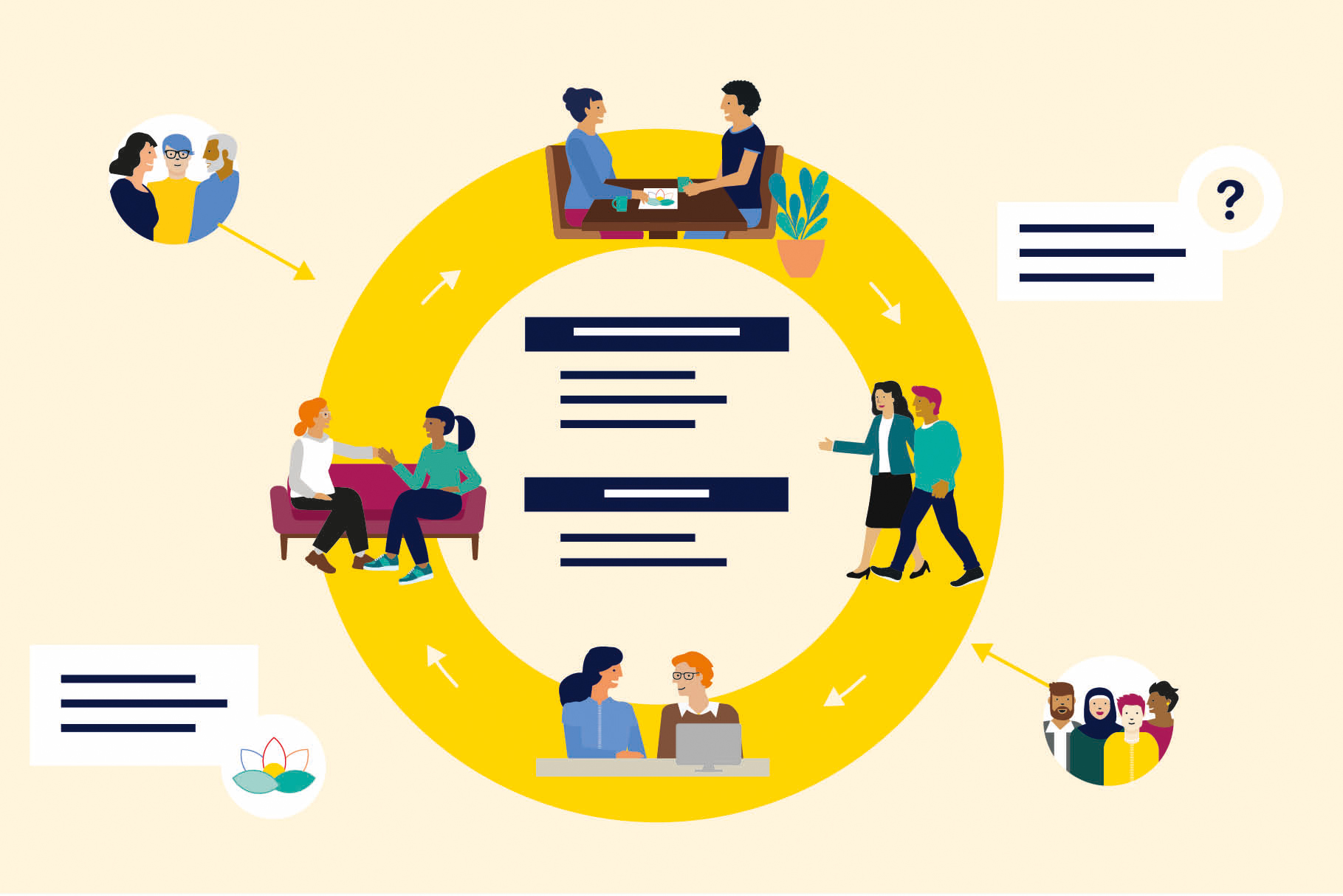
Let's GROW
The GROW continuous dialogue cycle at Utrecht University has an appreciative, development-oriented approach, based on the principles of Recognition and Rewards. Not just one annual review per year, but a continuous dialogue between employee and manager that stimulates growth and cooperation. GROW stands for Conversations about Results, Development and Well-being (Gesprekken over Resultaten, Ontwikkeling, en Welzijn in Dutch). Discuss with other participants why staying in touch throughout the year matters. Find inspiration for your own conversations with your manager or employees. Let's GROW!
Stefanie Vrancken & Stans de Haas Utrecht University
Same evaluator, new evaluation: how to change the way we evaluate our colleagues
It takes a lot to change the way you look at an academics portfolio and contributions when you have been part of a different evaluation culture for so long. At WUR we trained the same group of evaluators to see their evaluation through the lens of recognition & rewards. We focus on giving room to diversity and not to biases. Let's see if you can too
Kathelijne de Vrijer & Emma van Dijk - Wageningen University
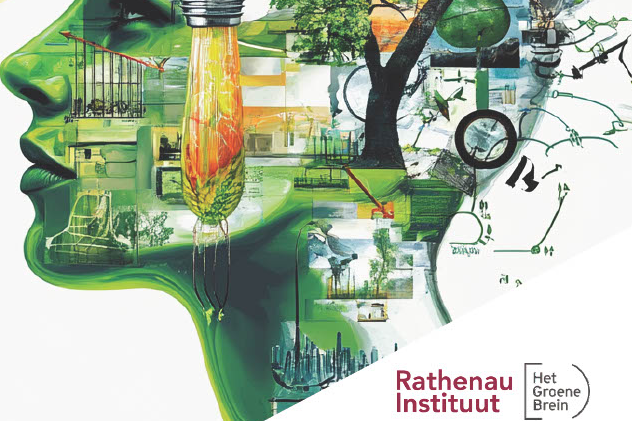
Sustainability by Design: Rethinking Incentives, Impact and Recognition in Science
Sustainability in science is often seen as a separate challenge, but what if it is fundamentally a system issue? The recently published transition analysis by Het Groene Brein and the Rathenau Institute finds that the main barriers in advancing sustainability are not a lack of ambition, but features of the research system itself. These seem common features that are also challenging the integration of Recognition & Rewards. Would our objectives succeed better when connected to each other rather than pursued as stand-alone agendas?
From research institutes, universities of applied sciences and research universities to University Medical Centres, the Dutch knowledge sector is increasingly committed to sustainability. The report provides understanding which systemic factors enable or hinder sustainability. It identifies key opportunities and barriers, highlights actors with a pivotal role, and outlines what is needed to embed sustainability across education, research and institutional operations.
In this showcase, xxx will discuss the findings of the transition analysis and explore how connecting sustainability with Recognition & Rewards could help accelerate a broader transformation towards a more sustainable, impactful, and future-proof science system.
Antoine Heideveld - NWO
Stronger Profession, Better Research
Research managers are key actors in the Dutch knowledge and innovation system, where topics such as interdisciplinary collaboration, open science, public-private partnerships, and societal impact give momentum to the professionalisation of our profession. ARMA-NL advances a thriving research and innovation ecosystem in the Netherlands through building a strong, recognized and visible Research Management & Administration (RMA) profession. It provides a network for knowledge exchange, stimulates professional development and advocates for the profession.
Alma Erenstein - ARMA-NL
Just prove it!
In this interactive session, we will explore what makes a narrative CV truly evidence-based. Through a playful activity, game element and discussion, participants will reflect on the kinds of evidence they find convincing, where interpretation differs, and how assessment practices can align with the ambitions of Recognition & Rewards.
Helga Varwijk - NWO
Sanna-Mari Kuisma - Zon-MW
Recognition & Rewards Festival
 Registration website for Recognition & Rewards Festival
Recognition & Rewards Festivalnienke@nekzt.nl
Recognition & Rewards Festivalnienke@nekzt.nlhttps://www.aanmelder.nl/recognitionandrewards
2026-11-12
2026-11-12
OfflineEventAttendanceMode
EventScheduled
Recognition & Rewards FestivalRecognition & Rewards Festival0.00EUROnlineOnly2019-01-01T00:00:00Z
To be announcedTo be announced