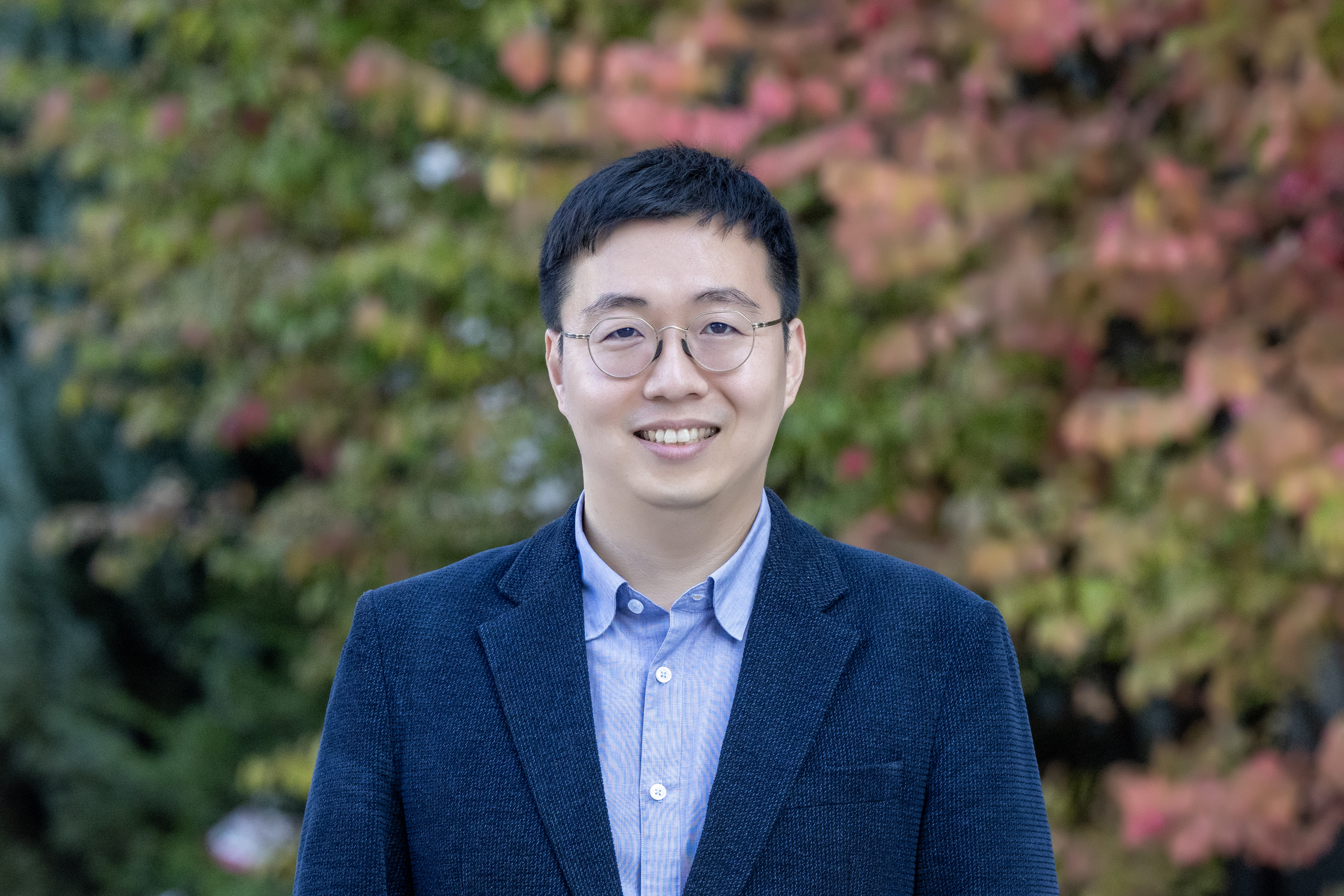
Kyo Bin Kang
Biosketch
Kyo Bin Kang is an Associate Professor at the College of Pharmacy, Sookmyung Women’s University in Seoul, Korea. Since establishing his lab in 2018, he has focused on applying computational mass spectrometry-based metabolomics to study specialized metabolites produced by bacteria, fungi, and plants.
Trained as a natural product chemist, he completed his PhD at Seoul National University in 2016, concentrating on the purification and structural elucidation of phytochemicals. During his first postdoctoral research at the same institution, he developed a strong interest in mass spectrometry-based metabolomics as a powerful tool in natural product discovery. To deepen his expertise, he joined the Dorrestein Lab at UC San Diego for his second postdoctoral training, where he became a devoted proponent of computational mass spectrometry and open science. His lab now investigates not only the discovery of novel or bioactive compounds, but also the ecological and biochemical logic behind the chemical diversity of natural products—how and why they are biosynthesized, and how organisms biotransform and detoxify foreign molecules. Metabolomics is central to generating hypotheses across all these research directions. Kyo Bin is also actively engaged in infrastructure development for the Korea MetAbolomics data repository (KMAP), striving to align it with the FAIR principles and harmonize it with other global repositories.
Have a look at his lab page for more information: https://www.kyobinkanglab.org
Presentation
Qualitative Metabolomics Accelerates Function Studies of Natural Products
Structural annotation of unknown metabolites has long been regarded as the central bottleneck of untargeted, mass spectrometry-based metabolomics—a challenge that has persisted for over two decades. Recent advances in computational mass spectrometry, however, are dramatically improving annotation rates across diverse application domains. By decomposing complex metabolite mixtures into structural, substructural, and chemical class information, these tools enable not only the putative identification of key biomarker features but also the generation of mechanistically grounded hypotheses directly from annotation data. Specialized metabolites, also known as natural products, exhibit immense chemical diversity shaped by the long course of evolution. Qualitative metabolomics, empowered by computational mass spectrometry, can offer insights into a wide range of questions surrounding natural products, including their biosynthesis, ecological function, and detoxification. In this presentation, I will highlight how state-of-the-art computational MS approaches can guide us toward causative hypotheses concerning plant and microbial specialized metabolites.
Benelux Metabolomics Days 2026
 Registration website for Benelux Metabolomics Days 2026
Benelux Metabolomics Days 2026meike.bunger@health-ri.nl
Benelux Metabolomics Days 2026meike.bunger@health-ri.nlhttps://www.aanmelder.nl/beneluxmetabolomicsdays2026
2026-09-21
2026-09-23
OfflineEventAttendanceMode
EventScheduled
Benelux Metabolomics Days 2026Benelux Metabolomics Days 20260.00EUROnlineOnly2019-01-01T00:00:00Z
Villa JongeriusVilla JongeriusKanaalweg 64 3527 KX Utrecht Netherlands

event registration made easy
aanmelder.nl is the software partner for events.
Click here to discover the software.